
Have you noticed a lot of bath products sound like food? Flavors like vanilla, cucumber, orange and almond are all making it into personal care products. I have some tangerines that I was trying to figure out what I should do with and it occurred to me that combining them with vanilla might be nice. Searching online for "tangerine and vanilla" I found hand cream, hair "texturizer", scented soap and lip balm! And here I was thinking about making a sauce for scallops...
Citrus combines wonderfully with seafood. The only thing is the acid can actually cook the fish, so you have to marinate quickly, use the rind only or make a sauce to finish the dish instead. Vanilla may be a surprising choice to pair with citrus but it actually makes a lot of sense. Vanilla counteracts the acidity in citrus and creates a more complex flavor. Over ten years ago at the now-defunct Maurice restaurant in the Parker-Meridien hotel in New York, Michelin three-star French chef Alain Senderens introduced a groundbreaking dish--lobster with vanilla sauce. Since that time, chefs have used vanilla in savory dishes as well as sweet ones. For example British chef Jamie Oliver uses the scrapings from a whole vanilla bean and lemon juice as a marinade for steamed sea bass. But at three dollars a pop for vanilla beans, I'm sticking with vanilla extract until prices come back down to earth.
Scallops are one of the fastest cooking and most elegant shellfish. They make a fancy looking meal in a flash. Since they are expensive, stretch them, by sauteeing them to serve over risotto, a salad or mix with other seafood like fish or shrimp. They are very mild and take well to this Tangerine Vanilla sauce. It's lovely creamy and sweetly scented, but I wouldn't suggest bathing with it.
Tangerine Vanilla Seafood Sauce
2 tangerines
1/4 teaspoon vanilla extract
1/4 teaspoon finely grated tangerine peel
1 Tablespoon unsalted butter
dash of salt
Squeeze the tangerines and reduce the juice in a small saucepan over low heat. When the liquid is syrupy and reduced by at least half, about two tablespoons total, take off the heat and add the vanilla and tangerine peel. Stir to combine. Whisk in the butter over low heat. Salt very lightly.
Use to top sauteed scallops, shrimp or other mild flavored seafood. Can be used right away or refrigerated.
Enjoy!




 I read a couple of blogs about these tuocha today and they both were pretty much of the same opinion in that they found these tuocha to be boring. I don't really think of them as boring I think these little 100 gm tuo,s are alright. At $4.00 each, what do you expect? A complex, multifaceted cup? Not gonna happen! Originally made for export to France in the 1960,s they have been a Xiaquan mainstay ever since. Given the price range these tuo are in, the only thing I expect from them is that they brew a cup with good clarity with no offensive odors or flavors. If they can pass those two tests then I think Ive gotten my moneys worth. The maocha used for these is from the Lincang area and some of the smallest leaf size Ive seen. I don't think these will ever improve with time, their a drink now shu. Admittedly these are not the shu,s I reach for when I got a hankering rather when I don't really want to be bothered with having to think about tea is when I drink this shu. Why the French supposedly love these I cant imagine. Nothing to love here, nothing to complain about either.
 These are the only Xiaquan shu Ive ever had. I cant see myself buying any more of them but no regrets as their so cheap. I tell ya, these things are a lot better than anything from Rishi or any of those kinds of tea vendors but not interesting enough for the serious pu-heads. A little woodsy, slightly sweet and that,s about it. Their alright.


 Feb 25, 2007, at 11:00am the first "Wu-Wo Tea Ceremony", in the San Diego area, Fallbrook.121 & 125 E. Hawthorne, at "BlissSville's" and"Fallbrook Holistic Health Center", was held and it was great ! Thanks to Holly's yoga center, the place was made for having tea ceremonies. Many of the brewers had never heard of Wu-Wo Tea Ceremony and none had ever participated in one. I was personally impressed at the enthusiasm of the brewers and how smooth things went. At the end of the ceremony we did something that Ariel does often and teaches, called "tone circles", we all chanted in a very resonating level it was a perfect finish. Everyone including myself can't wait to do this again.
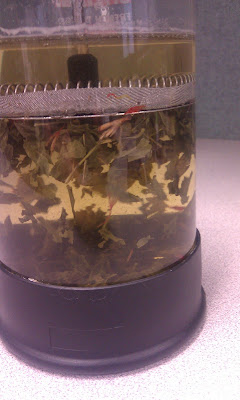
 Finding the right tea kettle to heat your water can make the difference between so-so tea and great tea. Choose your kettle with care. I’ve digested a ton of info available online and pared it down to 5 key items. Part I covers 1 and 2 on The Taste of English Tea Blog.


 Allow children to be happy in their own way, for what better way will they find?
 Order, control - ah, I love it! (Tho I am working hard on embracing creative messes. That's another story.)


 Last Saturday morning I was staring into the calm visage of this Tang Dynasty Bodhisattva at the Gallery while waiting for our guests to arrive. I don't always work at the Gallery on weekends but Toki of The Mandarin's Tea blog was coming over with friends and Michael recommended I show up. He said, "They're bringing something special and it's important that you see this." I asked Michael what I would be looking at... "A bit of history", he said with a wry smile. And so I started my weekend at work but not working. Staring into the depths of Bodhisattva until the doorbell rang.
 It was such a wonderful opportunity to finally get a chance to see and handle such an old tea brick. It looked and felt more like a piece of quarried stone than a brick of tea.
 A brief origin story:
 Winne and I wrote down the brick's dimensions:
 Notice the little white spots on the surface. I thought they might be mold spores. But a closer inspection revealed a crystalline structure. Winnie said they were sugar crystals from the leaf. I've only seen that on the outside of naturally dried persimmons and I have to wonder how long it must take to start seeing sugar crystals on a pressed tea cake.
 This brick was so compact we could see the saw marks from previous tea brewing occasions. Betty said they also used a hammer to loosen the corner piece when they last brewed tea from this brick.
 The light colored spots are probably cross sections of the tea stems.
 A close look at the surface shows a lovely patina from the age and the tea oil. Because of that, there were subtle color variations when the brick was moved around beneath the light. Sometimes it took on a dark iron colored hue with bluish tints or it picked up coppery accents against a deep mahagony.
 Michael with his oyster shucker turned puer knife, looking for a suitable entry point. I had never seen him more careful but I understood. There was a danger of splitting off more than he wanted or leaving cracks in the brick.
 I held my breath when the knife went in but there was no need. Michael's a pro and he got exactly what he wanted:
 The biggest surprise was the delicate fragrance emanating from the leaves Michael pried off the brick. Like a faded perfume, more a memory than an experience. Since we already had a chance to drink Toki's sample, we weren't in rush to brew this. Also, there were the other teas we had to drink as well. Betty and Conrad's visit continues in part 2... coming soon.
 Wonder Teas

 This is the story behind them: When we leave Paris for more than two days, we always send an e-inivtation to close non-Parisian friends who may enjoy visitng Paris solo while we are away.
 Our dear friends James and Martica lived many years in Paris and moved to the Loire Valley a few years ago where we visit them very often. Here we are having a drink at Montseareau.